Reviewing Dare to Begin SVG for Real Embroidery Projects
As a designer who spends half my life digitizing and the other half stitching, I have learned that not every digital file translates well to thread. We live in an era where Crafts and Graphics intersect constantly, but there is a distinct difference between a vector that looks crisp on a screen and one that behaves itself under the needle. Recently, I evaluated the Dare to Begin SVG Cut File with a specific goal in mind: determining its viability for actual embroidery projects, from custom client work to small shop merchandise.
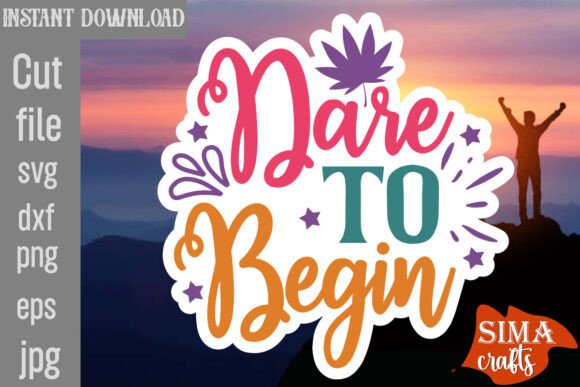
The first impression of this design is one of quiet confidence. The phrase "Dare to Begin" carries a motivational weight that resonates deeply with makers, entrepreneurs, and anyone starting a new chapter. Visually, the layout feels balanced, avoiding the clutter that often plagues inspirational typography. For an embroidery designer, this simplicity is a double-edged sword. It means the design is versatile, but it also means there is nowhere to hide if the spacing or font choice is off. Fortunately, the visual personality here leans towards modern minimalism, which tends to stitch out cleanly when handled with care.
From Screen to Stitch: A Real-World Test Scenario
To truly understand how the Dare to Begin SVG Cut File performs, I moved beyond theoretical analysis and imagined a concrete production scenario. Picture a local boutique owner who wants to launch a line of motivational tote bags for students and creatives. She needs a design that is legible from a distance but elegant enough to justify a premium price point. This is where the rubber meets the road.
In this context, the design’s potential shines. When applied to a canvas tote bag, the boldness of the message pairs well with the sturdy texture of the fabric. However, because this is a digital embroidery file package primarily marketed for cutting machines, we must address the conversion process. The download includes an SVG for Cricut, a DXF for Silhouette, an EPS vector, and a transparent PNG. For embroidery, the EPS or SVG serves as the foundational artwork. You cannot simply plug these into an embroidery machine without digitizing them first, unless you are using a hybrid approach like appliqué.
If I were creating an embroidered patch or a direct-to-garment design for a sweatshirt, I would use the vector files to trace the lettering in my digitizing software. The clean lines of the Dare to Begin SVG Cut File make this tracing process straightforward. There are no excessive flourishes or tiny, fragile serifs that would break during stitching. This makes it an excellent candidate for satin stitch borders or simple fill stitch interiors, depending on the desired thickness of the letters.
Navigating Fabric and Technique Challenges
While the design is aesthetically pleasing, practical application requires caution. One of the most common mistakes makers make is assuming a cut file will automatically work as a low-density embroidery pattern. If you plan to use this for sweatshirt embroidery, you must consider the pile of the fleece. Tiny details can get lost in the fuzz. Therefore, I recommend scaling the design up slightly larger than you might for a t-shirt to ensure legibility.
Another critical consideration is stitch density. Since this is a text-based design, overcrowding the letters with stitches can cause the fabric to pucker, especially on thinner materials like cotton tees or baby clothes. If you are digitizing this yourself, pay close attention to the pull compensation. For those who prefer not to digitize, this design works beautifully as an applique design. You can cut the letters from contrasting fabric using the included SVG or DXF files, then use a narrow satin stitch or running stitch to secure them to the garment. This method reduces bulk and adds a lovely textured dimension to the finished product.
Curved surfaces present another hurdle. If you are planning cap embroidery, the flat nature of the text must be warped digitally to fit the crown’s curve. Without proper adjustment, the words may appear distorted after stitching. Always test on a scrap piece of the same material before committing to the final item. This is non-negotiable for maintaining professionalism in commercial embroidery projects.
Enhancing Brand Value and Customer Appeal
Why choose this specific design over hundreds of others? The answer lies in its emotional resonance and versatility. For Etsy sellers and small shop product creators, offering personalized items is key to standing out. The phrase "Dare to Begin" is not tied to a specific holiday or season, making it a year-round seller. It fits seamlessly into categories like graduation gifts, new business launches, or recovery milestones.
When used in custom apparel, the design elevates the perceived value of the item. A plain hoodie becomes a statement piece. A simple pillow cover transforms into a piece of home decor that inspires daily action. This emotional connection drives buyer engagement. Customers are not just buying thread on fabric; they are buying a reminder to take that first step. This psychological layer adds depth to your handmade product listings.
Furthermore, the inclusion of a high-resolution PNG with a transparent background allows for immediate use in printable mockup creation. Before you even stitch a single thread, you can create compelling social media content showing how the design looks on various products. This speeds up your marketing workflow and helps you gauge customer interest before producing inventory.
Practical Notes for the Serious Maker
Before you integrate the Dare to Begin SVG Cut File into your workflow, keep these technical checkpoints in mind:
- Check Your Licensing: Always verify the commercial use rights provided with the download. While many SVGs allow for physical end-products, some restrict digital resale or mass production. Ensure your intended use aligns with the creator's terms.
- Stabilizer Selection: For stretchy fabrics like jersey knits, use a cut-away stabilizer to prevent distortion. For woven fabrics like linen or canvas, a tear-away may suffice, but hooping tightly is essential.
- Thread Color Contrast: Test the design in both monochrome and high-contrast combinations. A dark thread on a dark fabric may lose the nuance of the letterforms. Use the PNG preview to simulate different colorways.
- Hoop Size Compatibility: Ensure the scaled design fits within your machine’s hoop. If you need to enlarge it significantly, check that your machine can handle the larger area without skipping stitches.
- Digitizing Quality: If converting the vector to an embroidery file, manually adjust stitch angles to follow the natural flow of the letters. Avoid automatic digitizing settings that often create messy jump stitches or excessive trims.
In conclusion, the Dare to Begin SVG Cut File is a robust asset for the modern maker. It bridges the gap between digital crafting and traditional needlework. Whether you are creating a holiday gift, a personalized gift for a friend, or stock for your online store, this design offers the clarity and sentiment needed to succeed. Just remember that the file is the starting point, not the finish line. Your skill in selecting fabrics, managing tension, and applying technical knowledge will determine the final quality. With careful execution, this design can become a staple in your portfolio of design assets, proving that sometimes, the best projects are the ones that encourage us to start.