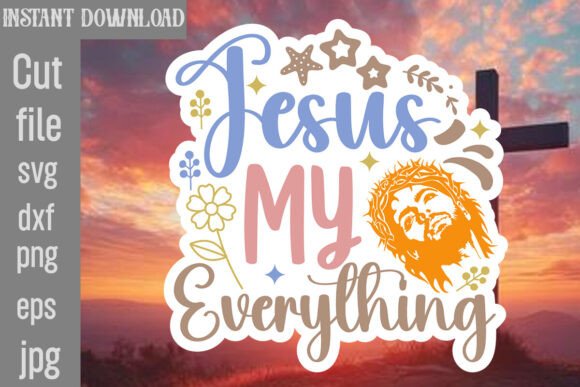
Reviewing the Jesus My Everything SVG for Embroidery
As a designer who spends more time staring at stitch simulations than I care to admit, I have learned that not every digital file translates well to thread. We live in an era where Crafts and Graphics intersect constantly, but the gap between a crisp vector line on a screen and a textured, stitched reality is wide. Recently, I pulled the Jesus My Everything SVG Cut File into my workflow to evaluate its potential for real-world application. This was not just a cursory glance; I wanted to see how this design holds up when subjected to the practical demands of machine embroidery, client expectations, and the rigors of daily wear.
First Impressions: Mood and Visual Personality
The first thing that strikes you about the Jesus My Everything SVG Cut File is its inherent simplicity. In embroidery, complexity is often the enemy of clarity. This design relies on clean lines and a balanced layout, which immediately suggests versatility. The mood it creates is one of quiet reverence and modern minimalism. It does not shout; it whispers. For a designer, this is a valuable trait. It means the design can sit comfortably on a variety of products without overwhelming the fabric or the viewer.
The visual personality is contemporary yet timeless. It avoids overly ornate flourishes that can turn into a tangled mess of threads under high-speed stitching. Instead, it offers a structured aesthetic that feels intentional. When I look at this file, I do not just see a graphic; I see a finished product waiting to happen. It feels like it belongs on items that are meant to be cherished, such as personalized gifts, nursery decor, or everyday carry items that hold spiritual significance for the owner.
Real-World Application: From Screen to Stitch
To truly test the viability of this design, I imagined a specific scenario: a custom order for a boutique client who sells high-end, faith-based apparel. The request was for a series of tote bags and sweatshirts that felt modern and understated. The Jesus My Everything SVG Cut File fit this brief perfectly. Here is how I envision it performing across different mediums:
- Sweatshirt Embroidery: On a heavyweight cotton blend, this design would shine. The solid shapes allow for consistent fill stitches that lay flat against the fuzzy texture of fleece or French terry. It adds a touch of professionalism to custom apparel without looking bulky.
- Tote Bag Design: For canvas totes, the design’s clarity ensures it remains legible even from a distance. The boldness of the message pairs well with the rugged nature of canvas fabric, making it an ideal choice for everyday use items.
- Baby Embroidery: Softness is key here. Because the design is not overly dense, it can be scaled down for baby onesies or blankets without creating a stiff, uncomfortable patch on delicate skin. It makes for a thoughtful, personalized gift for new parents.
- Embroidered Patch: If applied to a twill backing, this graphic could serve as a standalone patch. The clean edges of the SVG ensure that satin stitch borders would wrap neatly around the contours, giving a polished, retail-ready look.
For Etsy sellers and small shop owners, this versatility is crucial. You are not limited to one product type. The same digital embroidery file can be adapted for holiday embroidery projects, wedding gifts, or standard inventory, maximizing the return on your design investment.
Navigating Technical Challenges
While the design is strong, no file is immune to the physics of embroidery. There are specific situations where you must exercise caution. If you are working with stretchy fabric, such as jersey knits, the stability of the design becomes paramount. Without proper stabilizer, the fill stitches might pull the fabric, causing distortion. I recommend using a cut-away stabilizer for garments that will be washed frequently to maintain the integrity of the stitch density.
Another consideration is hoop size. While the design is scalable, shrinking it too much for a small hoop—say, under four inches—could compromise the legibility of the text. Tiny lettering can easily become lost if the stitch count is too high for the reduced scale. Conversely, expanding it too large on a thin fabric might require additional topping or interfacing to prevent puckering. Always test the design on scrap fabric first. This simple step saves hours of frustration and prevents wasted materials.
Dark fabrics present another challenge. If you are stitching white or light-colored thread on black fabric, the contrast is striking, but you must ensure your underlay stitches are sufficient to cover the background fabric. A lack of proper underlay can result in the dark fabric peeking through the top stitches, ruining the clean look of the finished product.
Enhancing Brand Value and Customer Trust
From a business perspective, the quality of your design assets directly impacts your brand consistency. Using a well-structured file like the Jesus My Everything SVG Cut File signals professionalism. Customers may not know the technical details of stitch density or vector paths, but they can see the difference between a sloppy, distorted image and a crisp, clean embroidered piece. This attention to detail builds trust.
When you offer a handmade product that looks professionally executed, you increase its perceived value. This is particularly important for commercial embroidery projects where margins matter. A design that stitches out cleanly and quickly reduces machine time and thread waste, improving your overall efficiency. Furthermore, the spiritual nature of the design fosters an emotional connection with buyers, enhancing the giftability of the item. It is not just a shirt; it is a statement of faith, made with care.
Practical Notes for the Designer
Before you load this file into your machine, take a moment to review the technical specifications provided. The download includes an SVG for Cricut, a DXF for Silhouette, an EPS vector file, and a PNG with a transparent background. It is important to note that these are primarily cutting and graphic files. If you are using them for machine embroidery, you will likely need to convert them using your embroidery software or purchase a dedicated embroidery format if available. Always confirm licensing terms before selling finished items. Most designers allow commercial use for physical products, but restrictions may apply to digital resale.
Here is my checklist for success with this design:
- Test on Scrap: Never skip this step. Check how the thread colors interact with your chosen fabric texture.
- Check Contrast: View the design in black and white to ensure the shapes remain distinct without color reliance.
- Stabilizer Selection: Match your stabilizer to your fabric weight. Heavier fabrics need less support; lighter fabrics need more.
- Hoop Placement: Center the design carefully, especially on curved surfaces like caps or pockets.
- Thread Quality: Use high-quality rayon or polyester thread to reduce breakage and enhance sheen.
In conclusion, the Jesus My Everything SVG Cut File is a robust asset for any creative entrepreneur. It bridges the gap between digital precision and tactile artistry. Whether you are decorating a single apron for a friend or producing a run of tote bags for your small shop, this design offers the reliability and aesthetic appeal needed to create standout pieces. By respecting the technical nuances of embroidery and leveraging the clean lines of this graphic, you can produce work that is both visually stunning and commercially viable.