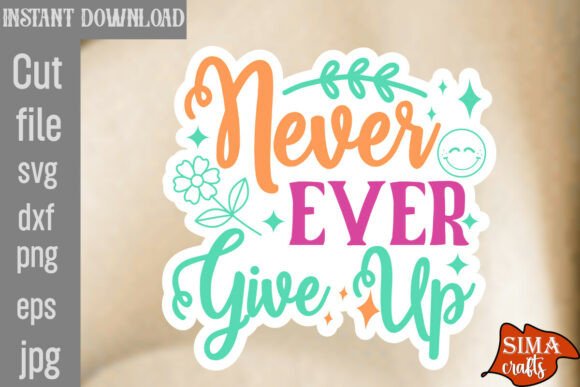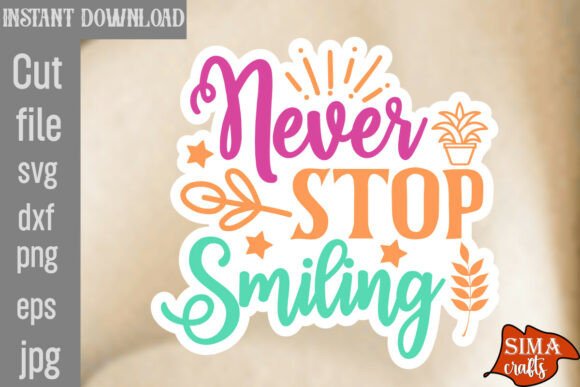
Reviewing Never Stop Smiling SVG Cut File
As a designer who spends half my life digitizing and the other half stitching, I have learned that not every cute graphic translates well to thread. We often browse marketplaces looking for that perfect machine embroidery design, drawn in by bold typography or whimsical shapes, only to realize later that the details are too fine for a stable stitch-out or the layout fights with the fabric’s grain. Today, I am taking a close, practical look at the Never Stop Smiling SVG Cut File. This is not just a digital asset; it is a potential cornerstone for your next craft business lineup or a heartfelt personalized gift.
The first thing that strikes me about this design is its inherent optimism. The phrase "Never Stop Smiling" carries a weight of positivity that resonates deeply in today’s market. Visually, the layout appears balanced, offering a mix of structured lettering and potentially softer, decorative elements depending on how you choose to manipulate the vector paths. For an embroidery project, this balance is crucial. You want a design that reads clearly from a distance but holds up under close inspection. The mood here is uplifting, making it a natural fit for items meant to comfort, inspire, or celebrate.
From Screen to Stitch: Real-World Application
Let’s move beyond the theoretical and imagine this design in a real-life scenario. I recently worked on a custom order for a local boutique specializing in mental health awareness merchandise. They needed a design that was subtle yet impactful for a line of heavyweight cotton tote bags. The Never Stop Smiling SVG Cut File came to mind immediately. Why? Because the typography, when converted from its vector roots into an embroidery file, offers excellent opportunities for varied stitch types.
For a tote bag design, durability is key. I would likely approach the larger letters with a dense fill stitch to give them body and presence against the canvas texture. The smaller details or connecting elements could benefit from a clean satin stitch border to define the edges sharply. When I visualize this on a natural-colored tote, using deep navy or forest green threads, the contrast creates a sophisticated, boutique-quality look. It does not scream "cheap souvenir"; it whispers "thoughtful accessory." This is the difference between a generic graphic and a refined finished product.
Consider also its application in sweatshirt embroidery. Here, the fabric is thicker and has a pile. A design with too much intricate detail can get lost or cause puckering if the stitch density is not managed correctly. However, the bold nature of this specific phrase suggests it can handle the transition well. By using a slightly wider satin stitch for the outlines and ensuring adequate underlay stitches, the design sits proudly on the chest of a hoodie without sinking into the fleece. It becomes a statement piece for custom apparel that customers actually want to wear.
Navigating Technical Challenges
While the design is versatile, an experienced eye knows where caution is required. One common pitfall with typography-based graphics is the handling of small counters—the enclosed spaces inside letters like 'o', 'e', or 'a'. If you are working with a small hoop size, such as a 4x4 inch hoop for a baby item, you must ensure these spaces do not fill in completely with thread. This is where reviewing the digital embroidery file structure becomes essential. Since the download includes SVG, DXF, EPS, and PNG formats, you have the flexibility to adjust scales before digitizing or converting.
If you are using this for an applique design, the process changes entirely. You might use the SVG cut file to cut a contrasting fabric shape, then use a simple running stitch or zigzag to secure it. This technique reduces bulk and is ideal for baby embroidery projects where softness against sensitive skin is a priority. A thick, dense stitch on a onesie can be irritating, but an applique approach keeps the handmade product comfortable and visually charming.
Fabric texture also plays a massive role. On smooth quilting cotton, the design will look crisp and precise. On textured linen or waffle-knit towels, the stitches may need to be denser to bridge the gaps in the weave. Always test on scrap fabric first. I cannot stress this enough. Check your thread colors against both light and dark backgrounds. A design that pops on white might vanish on black if you do not adjust your thread palette accordingly. For dark fabrics, consider using a lighter stabilizer or even a backing fabric to prevent the garment color from showing through the stitches.
Commercial Viability and Brand Consistency
For Etsy sellers and small shop product creators, consistency is brand currency. The Never Stop Smiling SVG Cut File offers a cohesive aesthetic that can be repeated across various product lines. Imagine offering this design on a matching set: a kitchen towel, a mug wrap (using heat transfer vinyl from the SVG), and a tote bag. This cross-category appeal increases the perceived value of your store. It shows that you are not just selling random items, but curating a lifestyle.
The inclusion of multiple file formats—SVG for Cricut, DXF for Silhouette, EPS for vector editing, and PNG for sublimation or printable mockups—means you are not limited to embroidery alone. You can create printable mockup assets for your online listings, showing customers how the design looks on different products before they buy. This versatility is a huge advantage for creative entrepreneurs who want to maximize their return on investment for each design asset they purchase.
However, always verify licensing terms. While this is a digital download intended for creative use, confirming whether it allows for commercial sales of finished physical items is a necessary step before listing your holiday embroidery gifts or wedding gifts for sale. Professionalism means respecting intellectual property and ensuring your commercial embroidery practices are above board.
Final Designer Notes
To get the best results from the Never Stop Smiling SVG Cut File, keep these practical tips in mind:
- Stabilizer Selection: Use a cut-away stabilizer for stretchy fabrics like t-shirts and knits to prevent distortion over time. For woven fabrics like tote bags, a tear-away may suffice, but cut-away offers more longevity.
- Thread Contrast: Test high-contrast combinations first. If the design relies on legibility, ensure the thread color stands out distinctly from the fabric base.
- Scale Testing: Print the PNG file at 100% scale on paper and place it on your intended garment. Does it look too large? Too small? Adjust before you hoop.
- Detail Inspection: Zoom in on the EPS or SVG file. Are there any stray nodes or overlapping paths? Cleaning up the vector file before digitizing can save you hours of troubleshooting in your embroidery software.
- Wash Testing: Once stitched, wash the sample item. Check for thread breakage, shrinking, or puckering. This quality control step builds customer trust and reduces returns.
In conclusion, the Never Stop Smiling SVG Cut File is a robust addition to any designer’s library. It bridges the gap between digital precision and tactile warmth. Whether you are creating a comforting embroidered patch for a jacket, a cheerful pillow cover for a nursery, or a branded item for your craft business, this design holds up under scrutiny. It invites creativity while demanding respect for the technical nuances of embroidery. Treat it well, test it thoroughly, and it will serve your projects with distinction.