Reviewing the Be a Buddy Not a Bully SVG for Embroidery
As an embroidery designer who spends half my life digitizing and the other half stitching, I have learned that not every digital file translates well to thread. We often browse marketplaces looking for the next best seller, scrolling past thousands of design assets that look perfect on a screen but fail under the needle. Recently, I took a closer look at the Be a Buddy Not a Bully SVG Cut File to determine if it holds up in a real-world embroidery project. This is not just a graphic; it is a statement piece, and treating it with the right technical respect is crucial for a professional finished product.
First Impressions and Visual Personality
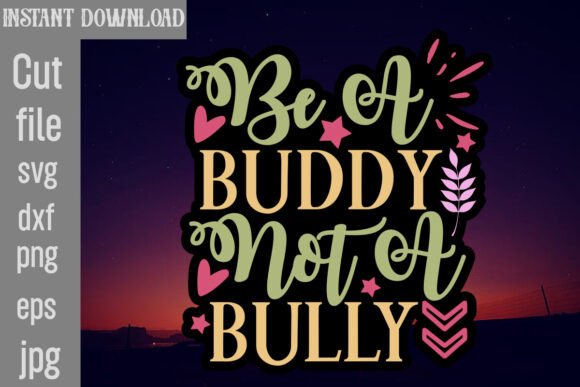
The first thing that strikes you about this design is its inherent warmth. The phrase "Be a Buddy Not a Bully" carries a gentle, educational weight, making it ideal for children’s items, school-related gifts, or community-building merchandise. Visually, the layout appears balanced, with a friendly aesthetic that avoids aggressive lines or overly complex details. For those of us working in Crafts, specifically within the realm of Graphics converted to stitch, simplicity is often key. Complex gradients do not translate to thread, so a clean, bold design like this one offers a strong foundation.
The mood is inviting. It does not scream for attention with chaotic elements; instead, it relies on clear typography and likely accompanying simple iconography to get the message across. This clarity is vital when you are working with thread colors that need to pop against various fabric backgrounds. A design with too much noise can get lost, but this concept allows for creative freedom in color selection while maintaining readability.
Real-World Application: The Custom Tote Bag Test
To truly evaluate the Be a Buddy Not a Bully SVG Cut File, I imagined applying it to a common high-demand item: a canvas tote bag. Tote bags are staples for Etsy sellers and small shop products because they are practical and serve as walking advertisements. When visualizing this design on a tote, the horizontal spread of the text works in your favor. It sits nicely across the center or the lower third of the bag without feeling cramped.
However, canvas has a distinct fabric texture. If you are using this as a machine embroidery design, you must consider how the stitches interact with the weave. A heavy canvas requires a sturdy stabilizer to prevent puckering, especially if the design includes any dense areas. If the original file is intended for cutting machines like Cricut or Silhouette, as suggested by the inclusion of SVG and DXF files, you might be using it for heat transfer vinyl (HTV) or appliqué. In an appliqué scenario, this design shines. You can use contrasting fabrics for the letters or shapes, reducing stitch count and adding a tactile, layered look that customers love in a handmade product.
Sweatshirts and Baby Items
Moving beyond totes, let’s consider sweatshirt embroidery. Fleece and cotton blends are forgiving, but they are also thick. If you are stitching directly onto a sweatshirt, ensure your hoop size is large enough to accommodate the full width of the phrase without distorting the garment. For baby embroidery, such as on a onesie or a burp cloth, scale is everything. You may need to resize the design significantly. Here, the vector nature of the EPS file included in the download becomes invaluable. You can scale it down without losing edge definition, ensuring that the small details remain crisp even at a reduced size.
For baby items, softness is paramount. A dense fill stitch can feel scratchy against sensitive skin. If you are digitizing this yourself from the provided graphics, opt for a lighter fill stitch or utilize satin stitch borders with minimal internal coverage. Alternatively, use the design as a template for an applique design, where the fabric provides the color and the machine only stitches a narrow border. This approach keeps the custom apparel comfortable and durable through multiple washes.
Technical Considerations and Potential Pitfalls
While the sentiment is universal, the execution requires care. One common mistake with text-heavy designs is ignoring the stitch density. If you convert this SVG directly into an embroidery file without proper digitizing software expertise, you risk creating a stiff, cardboard-like patch on your fabric. Always check the density settings. For curved surfaces like caps or hats, this design might be challenging due to its likely horizontal orientation. Caps require taller, narrower designs to fit the front panel correctly. Unless you are placing this on the side panel or using a very small version, it may not be the best fit for standard headwear.
Another critical factor is contrast. On dark fabrics, light threads are necessary, but you must ensure the background fabric does not show through sparse stitching. Using a matching top stabilizer or backing can help. Conversely, on light fabrics, avoid using threads that are too similar in shade to the material, or the message will vanish. Testing on scrap fabric is non-negotiable. Before committing to a final personalized gift or a batch of inventory for your craft business, run a test stitch. Check for thread breaks, tension issues, and overall alignment.
Commercial Viability and Brand Consistency
For commercial embroidery professionals and digital product sellers, the versatility of this file format is a significant advantage. The package includes SVG, DXF, EPS, and PNG files. This means you are not limited to embroidery. You can use the PNG for printable mockups on your website, giving customers a realistic preview of how the design looks on a shirt or mug. The EPS vector file allows for infinite scaling for large format printing or signage, expanding your product line beyond stitched goods.
When selling finished items, such as an embroidered patch or a holiday embroidery gift set, presentation matters. This design promotes kindness, which aligns well with brands focused on community, education, or family values. It enhances brand consistency if your shop specializes in positive, uplifting messages. Customers are drawn to products that tell a story or support a cause. By using a clear, legible design like Be a Buddy Not a Bully SVG Cut File, you increase the perceived value of the item. It looks professional, thoughtful, and ready to gift.
Licensing and Usage Rights
Before listing any items on Etsy or at a craft fair, always verify the licensing terms. While the product description confirms it is a digital download with multiple file types, it is essential to confirm whether commercial use is permitted for the finished physical products. Most designers allow you to sell the physical items you create, but reselling the digital file itself is typically prohibited. Clarifying this protects your small business and maintains good standing within the creative community.
Final Verdict for Makers
In conclusion, the Be a Buddy Not a Bully SVG Cut File is a versatile asset for any maker’s library. It bridges the gap between digital crafting and traditional embroidery. Whether you are creating a tote bag design for a local school fundraiser, adding a touch of kindness to a custom apparel line, or making a heartfelt personalized gift, this design offers a solid starting point. Its strength lies in its simplicity and positive message. However, its success depends entirely on your technical execution. Respect the fabric, choose your stabilizer wisely, and test your tensions. When done correctly, this design will not just sit on the fabric; it will elevate the entire piece, turning a simple item into a meaningful keepsake. For hobbyists and professionals alike, it is a worthy addition to your collection of design assets, provided you approach it with the eye of a seasoned stitcher.