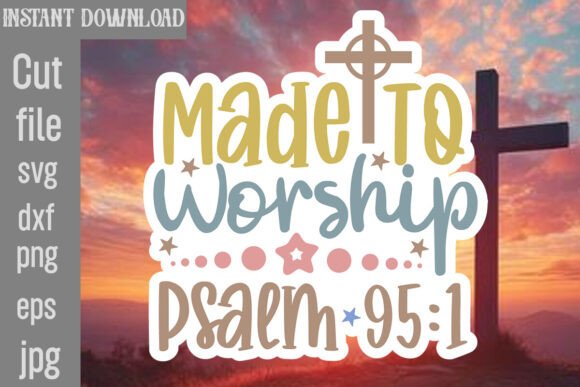
Reviewing the Made to Worship Psalm 95 1 SVG
As a designer who has spent countless hours digitizing and stitching out files for clients, I approach every new machine embroidery design with a mix of curiosity and caution. We have all been there: you download a beautiful graphic, load it onto your machine, and hope for the best, only to find puckered fabric or broken threads. That is why evaluating a file like the Made to Worship Psalm 95 1 SVG Cut File requires looking beyond the pretty preview image. We need to understand how it translates from a digital asset into a tangible, stitched reality.
This particular file falls under the broad categories of Crafts and Graphics, but its true value lies in its versatility for faith-based projects. When I first opened the zip folder, I was pleased to see the standard suite of formats: SVG for Cricut, DXF for Silhouette, EPS for vector editing, and a high-resolution PNG. For an embroidery professional, the SVG and EPS files are the gateways. They allow us to inspect the pathing and nodes before we even think about thread colors.
First Impressions and Visual Mood
The theme of Psalm 95:1 is one of joyful invitation and reverence. A design centered on this scripture needs to balance legibility with aesthetic appeal. In my review of the Made to Worship Psalm 95 1 SVG Cut File, the layout feels intentional. It is not cluttered. The typography appears clean, which is crucial when converting a cut file into an embroidery pattern. If the letters are too thin or the spacing too tight, the needle will struggle to create clean satin stitches or fill stitches without causing registration issues.
The mood this design creates is warm and welcoming. It fits naturally into the current trend of modern farmhouse decor and minimalist Christian apparel. It does not scream for attention; rather, it invites a second look. This subtle confidence is exactly what many customers look for in a personalized gift or a piece of custom apparel. It feels less like a loud statement and more like a quiet reminder of faith, which increases its wearability and giftability.
Real-World Application: The Tote Bag Test
To truly judge a design, you must imagine it on a product. Let us consider a real-life scenario: creating a custom canvas tote bag for a church book club or a women’s ministry retreat. Canvas is a sturdy fabric, but it has a distinct texture. When I visualize the Made to Worship Psalm 95 1 SVG Cut File on a natural cotton tote, I am thinking about contrast.
For a project like this, I would likely use a dense fill stitch for the text to ensure it stands out against the weave of the canvas. The design’s simplicity works in our favor here. Complex, swirling backgrounds often get lost on textured fabrics, but clear, bold lettering remains readable. If you are an Etsy seller or run a small shop product line, this kind of reliability is gold. You do not want to spend twenty minutes stitching a bag only to realize the details are muddy. This design seems structured to avoid that pitfall, provided you adjust your digitizing settings correctly.
Apparel and Stretchy Fabrics
Moving from totes to textiles, let us talk about sweatshirt embroidery. Hoodies and crewnecks are staples in the craft business world. However, fleece and cotton blends can be tricky. They stretch. If you apply a rigid design to a stretchy fabric without proper stabilization, the garment will pucker around the hoop area.
When using this file for a sweatshirt, I recommend paying close attention to the stitch density. Since this is originally a cut file, you will need to digitize it or use auto-digitizing software with care. Ensure that the column widths for any satin stitches are not too wide, as they may pull the fabric. A running stitch outline can help anchor the design before the main filling begins. The result should be a soft, flexible finish that feels comfortable against the skin, enhancing the perceived value of your handmade product.
Navigating Technical Challenges
No design is perfect for every situation. There are specific contexts where you should use the Made to Worship Psalm 95 1 SVG Cut File with caution. First, consider small hoop sizes. If you are working with a 4x4 inch hoop, you may need to scale the design down. Be careful here. Reducing size too much can cause tiny lettering to become illegible or cause thread breaks due to tight turns. Always check the minimum recommended size if available, or test on scrap fabric first.
Second, think about dark fabrics. If you are stitching on a navy blue or black shirt, the background color of your thread matters immensely. You might need to add a white underlay or use a lighter thread color to ensure the Psalm text pops. Without this contrast, the design disappears. This is a common mistake for beginners, but experienced designers know that thread color choice is half the battle.
Curved surfaces, such as caps, present another challenge. The front panel of a cap is stiff, but the curvature can distort long horizontal lines. If you plan to use this design for an embroidered patch or directly on a hat, consider breaking the text into two lines or adjusting the arch of the text to follow the cap’s curve. This prevents the "smiling" or "frowning" effect that often ruins otherwise professional-looking headwear.
Enhancing Brand Consistency and Value
For commercial embroidery professionals, consistency is key. Using a reliable design like this helps build trust with your customers. When a client orders a set of matching aprons for a bridal party or kitchen towels for a housewarming, they expect uniformity. The clean lines of this SVG allow for consistent replication across multiple items.
Moreover, the visual appeal of the finished product directly impacts buyer engagement. A crisp, well-stitched design signals professionalism. It tells the customer that you care about quality. Whether you are selling holiday embroidery items for Christmas or baby embroidery for christenings, the clarity of the text in this design supports a premium brand image. It does not look cheap or rushed. Instead, it looks thoughtful and deliberate.
Practical Designer Notes
Before you commit to a large production run, here are my practical notes for working with this file:
- Test on Scrap Fabric: Always stitch out a sample on the same type of fabric you intend to use for the final product. This helps you identify tension issues early.
- Check Stabilizer Choice: Use a cut-away stabilizer for stretchy fabrics like t-shirts and a tear-away for stable fabrics like linen or canvas. The right stabilizer prevents distortion.
- Review Stitch Density: If you are digitizing this yourself from the SVG, ensure the density is appropriate for the fabric weight. Too dense, and the fabric will pucker; too sparse, and the backing will show through.
- Contrast is King: Test your thread colors against both light and dark backgrounds. Use a printable mockup to visualize the final look before threading your machine.
- Verify Licensing: While this is a digital download, always confirm the license terms for commercial use. Ensure you are allowed to sell finished physical items made with this design.
In conclusion, the Made to Worship Psalm 95 1 SVG Cut File is a solid addition to your library of design assets. It offers flexibility for various projects, from simple tote bags to detailed apparel. By understanding its strengths and respecting its technical limitations, you can create beautiful, high-quality embroidery projects that resonate with your audience. It is not just a file; it is a tool for creating meaningful, tangible expressions of faith and style.