Reviewing the Remember Why You Started SVG
As a designer who has spent countless hours digitizing motifs and testing stitch paths, I approach every new machine embroidery design with a mix of curiosity and caution. We have all been there: staring at a screen full of digital assets, wondering which ones will actually translate well into thread and fabric. Recently, I took a close look at the Remember Why You Started SVG Cut File. While this is marketed primarily as a cut file for machines like Cricut and Silhouette, its utility in the embroidery world—particularly for hybrid projects, appliqué, and stencil-based techniques—deserves a thorough, practical evaluation.
First Impressions: Mood and Visual Personality
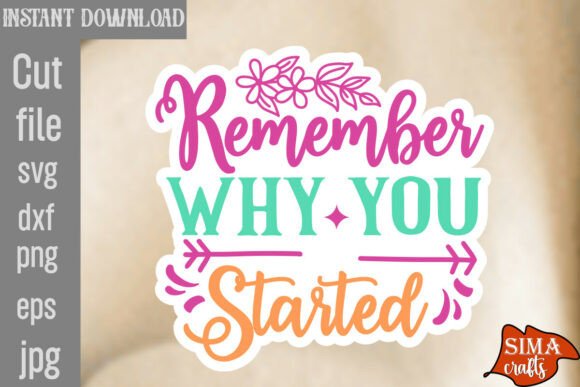
The phrase "Remember Why You Started" carries a heavy emotional weight. It is motivational, grounding, and deeply personal. Visually, the design relies on strong typography to convey this message. In my initial review of the Graphics provided in the zip file, I noticed the clean lines and balanced spacing. For an embroidery project, this is crucial. Overly intricate scripts can become a nightmare of thread breaks and bird’s nests, but this design appears to prioritize legibility and flow.
The mood it creates is one of resilience. It fits naturally into the category of mindful Crafts, appealing to makers who are often their own toughest critics. When I imagine this stitched out, I see it working best with bold, confident fonts rather than delicate, wispy lettering. The visual personality is straightforward and honest, which means the stitching needs to match that energy. There is no room for sloppy tension or uneven hooping here; the design demands precision because the message is about clarity of purpose.
Real-World Application: The Tote Bag Test
To truly evaluate the Remember Why You Started SVG Cut File, I mentally walked through a real-life scenario: creating a custom canvas tote bag for a fellow small business owner. This is a common request for Etsy sellers and boutique creators. The goal was to create a durable, everyday item that serves as a gentle reminder during chaotic workdays.
Using the included SVG File for Cricut, I could easily cut a heat-transfer vinyl (HTV) layer to combine with embroidery, creating a mixed-media look. Alternatively, if using the PNG File Transparent Background, 300 Dpi, I could print a sublimation transfer for a polyester blend bag. However, for a pure embroidery approach, this design shines as a large-scale back piece or a prominent front chest logo. The clear shapes allow for efficient fill stitch coverage without excessive density, which is vital for a tote bag that needs to remain flexible and not stiffen up under the weight of the thread.
I also considered this for sweatshirt embroidery. A crewneck sweatshirt provides a stable, thick fabric base that handles text-based designs beautifully. The contrast of white thread on a heather grey or navy fabric would make the message pop. In this context, the design acts not just as decoration, but as a brand statement for the wearer. It transforms a basic garment into a personalized gift with deep meaning.
Technical Considerations for Stitching
While the digital files are versatile, translating them into thread requires careful planning. Since this package includes vector formats like EPS File Vector and DXF File for Silhouette, you have the flexibility to resize the design without losing quality. This is a significant advantage when adapting the artwork for different hoop size constraints.
However, there are areas where caution is needed. If you plan to use this on stretchy fabric like a t-shirt jersey, you must use a high-quality cut-away stabilizer. Text designs can distort if the fabric pulls away from the stitches during wear. Additionally, if you are digitizing this yourself from the SVG for embroidery software, pay close attention to stitch density. Too dense, and the fabric will pucker; too sparse, and the backing material might show through, ruining the professional look of the finished product.
For those considering applique design techniques, the clean outlines of this SVG make it an excellent candidate. You could stitch a running stitch outline, place a contrasting fabric patch, and then satin stitch over the edge. This reduces the amount of thread used and adds a textured, layered look that is very popular in modern custom apparel. Just ensure that the corners of any letters are sharp enough to hold the satin stitch without bunching.
Navigating Fabric and Color Choices
The success of this design heavily depends on your choice of thread colors and fabric texture. On dark fabrics, a light metallic or bright white thread creates a striking contrast that enhances readability. On light fabrics, consider using a deep navy, charcoal, or even a vibrant accent color that matches your brand palette. Avoid low-contrast combinations, such as light grey on white, as the message will get lost, defeating the purpose of the design.
Be mindful of textured fabrics like linen or heavy canvas. While these materials look rustic and charming, the uneven surface can make small details in lettering appear jagged. If you are stitching on linen, increase the stitch length slightly to bridge the gaps in the weave. For baby embroidery items, such as a onesie or burp cloth, ensure the design is scaled down appropriately and that no scratchy backing materials are left exposed against sensitive skin.
Commercial Viability and Brand Consistency
For craft business owners and small shop product creators, the Remember Why You Started SVG Cut File offers strong commercial potential. It taps into the mental health and mindfulness niche, which continues to grow in popularity. Whether you are selling embroidered patches, holiday embroidery gifts, or year-round staples, this design adds emotional value to your inventory.
When creating printable mockup images for your online store, use the high-resolution PNG to showcase the design on various products. This helps customers visualize the final result. However, always verify the licensing terms before selling. Since this is a DIGITAL DOWNLOAD ONLY, ensure you understand whether the license covers physical finished goods or if it restricts digital resale. Most standard licenses allow for the sale of physical items, but it is critical to confirm this to protect your commercial embroidery operations.
Practical Designer Notes
Before committing to a final production run, follow these steps to ensure quality:
- Test on scrap fabric first: Always stitch out a sample on the same material you intend to use for the final product. This reveals any tension issues or registration errors.
- Check thread color contrast: View your test stitch from a distance. If the message is hard to read, switch to a higher-contrast thread.
- Inspect small details: Look closely at the entry and exit points of the stitches. Trim any jumps cleanly to maintain a professional appearance.
- Confirm hoop size: Ensure the design fits comfortably within your hoop with enough margin for the frame to grip the fabric securely.
- Use proper stabilizer: Match the stabilizer to the fabric weight. Heavy fabrics may need less support, while light knits require robust stabilization.
In conclusion, the Remember Why You Started SVG Cut File is a versatile asset for the modern maker. While it is packaged for cutting machines, its clean vector lines and powerful message make it an excellent candidate for embroidery adaptation. By paying attention to stitch density, fabric choice, and stabilization, you can transform this digital graphic into a tangible, impactful handmade product that resonates with customers. It is a reminder not just for the wearer, but for the creator: remember why you started making in the first place.