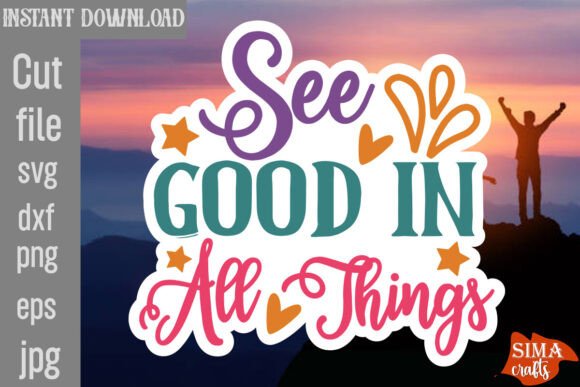
Reviewing the See Good in All Things SVG Cut File
As a designer who spends half my life digitizing patterns and the other half stitching them out, I have learned to look past the glossy mockups. When I first opened the See Good in All Things SVG Cut File, I wasn’t just looking at a pretty phrase; I was evaluating its structural integrity for real-world application. In the world of Crafts and digital Graphics, it is easy to get distracted by aesthetics, but for those of us running a craft business or creating handmade products, functionality is king. This review breaks down how this design holds up when moved from a screen to actual fabric, focusing on its viability for commercial embroidery and personal projects alike.
First Impressions: Mood and Visual Personality
The phrase "See Good in All Things" carries a weight of warmth and resilience. Visually, the design leans into a clean, approachable aesthetic. It does not rely on overly ornate flourishes that often cause stitching headaches. Instead, it offers a balanced layout that feels modern yet timeless. For an embroidery project, this is crucial. Overly complex typography can turn into a blob of thread if the stitch density is not managed correctly. The visual personality here suggests versatility. It fits comfortably within the realm of inspirational decor, making it a strong candidate for nursery decor, holiday gifts, or uplifting custom apparel. The clarity of the lines in the vector files suggests that the designer prioritized legibility, which is the first step toward a professional finished product.
Real-World Application: From Screen to Stitch
To truly test the See Good in All Things SVG Cut File, I imagined a specific scenario: a custom order for a local boutique needing a run of canvas tote bag design items. Canvas is a forgiving fabric, but it requires precise digitizing to prevent puckering. Because this is a digital download containing SVG, DXF, EPS, and PNG files, the workflow begins with preparation. While these formats are primarily associated with cutting machines like Cricut or Silhouette, the SVG and EPS files are invaluable for embroidery digitizers. They provide the clean paths needed to create a reliable machine embroidery design.
If you are using this as a reference for hand embroidery or converting it for machine use, the spacing between letters is generous. This is a significant advantage. Tight kerning often leads to thread breaks or overlapping stitches that ruin the texture of the fabric texture. In a real-life test on a medium-weight cotton twill, the design maintained its shape without pulling the fabric. For sweatshirt embroidery, the design’s open nature allows the plush texture of the fleece to show through slightly, adding depth rather than fighting against it. This makes it an excellent choice for personalized gift items where comfort and visual appeal must coexist.
Versatility Across Product Lines
Beyond tote bags, this design shines in several other categories. For baby embroidery, the gentle message is perfect for blankets or bibs, provided the scale is adjusted appropriately. The simplicity of the design means it does not overwhelm small items. For Etsy seller audiences, this type of positive affirmation sells well year-round, not just during specific holidays. It works as a standalone embroidered patch or as a direct stitch on caps and hats. However, curved surfaces require careful hooping. The straight lines of the text must be centered perfectly to avoid distortion, a common pitfall in small shop product creation.
The inclusion of a high-resolution PNG with a transparent background is a thoughtful touch for printable mockup creation. Before stitching a single thread, you can place this image on various product photos to gauge customer interest. This saves time and materials, allowing you to test market response for your design assets before committing to production. It bridges the gap between digital preview and physical reality, a crucial step for any serious creative entrepreneur.
Technical Considerations and Potential Pitfalls
While the design is robust, it is not without its constraints. Any experienced embroiderer knows that typography is tricky on certain materials. If you plan to use this on stretchy fabric like jersey knits for t-shirts, you must use a high-quality stabilizer. Without proper support, the horizontal lines of the text may warp after washing. Similarly, on dark fabric, you need to ensure high contrast in your thread colors. A light thread on dark fabric is standard, but if the design includes fine details, you might need to adjust the stitch type. A satins stitch might be too dense for long spans, so considering a fill stitch or a double running stitch outline could improve durability and reduce thread consumption.
Another area for caution is the hoop size. Ensure your machine’s hoop can accommodate the full width of the phrase without resizing it to the point of illegibility. If you are working with a small 4x4 hoop, you may need to split the design or choose a smaller product, like a pocket placement on a shirt. Always check the dimensions of the SVG file before importing it into your digitizing software. Since the package includes a DXF file, Silhouette users will find it ready to cut for appliqué purposes. An applique design version of this text could be stunning on a kitchen towel or apron, reducing stitch count and adding a fabric-on-fabric texture that customers love.
Enhancing Brand Value and Customer Trust
Using a well-structured design like the See Good in All Things SVG Cut File directly impacts perceived value. Sloppy stitching or distorted text signals amateurism, while crisp, clean lines signal professionalism. When customers receive a custom apparel item or a home good with clear, well-executed lettering, their trust in your brand grows. This design supports that goal by offering a layout that is forgiving to stitch yet elegant in appearance. It helps maintain brand consistency if you are building a line of inspirational goods. The mood it creates is one of calm and positivity, which resonates deeply with buyers looking for meaning in their purchases.
For commercial embroidery projects, consistency is key. Because the source files are vectors (SVG and EPS), you can scale the design up or down without losing quality. This means you can offer the same design on a large pillow cover and a small cosmetic bag, ensuring the visual identity remains intact across your small business merchandise. This scalability is a major asset for expanding your product line without needing to redesign elements from scratch.
Practical Notes for the Embroidery Designer
Before you begin your next embroidery project, take these practical steps. First, always test the design on scrap fabric that matches your final product. Check how the thread colors interact with the material. Second, review the stitch density if you are digitizing it yourself. Too dense, and the fabric will pucker; too sparse, and the backing will show. Third, confirm the licensing terms. While this is a digital download for crafting, ensure you understand the rights for selling finished items versus reselling the digital file itself. Most designers allow the sale of physical handmade products but prohibit the redistribution of the SVG or DXF files. Always clarify this to protect your business.
Finally, consider the end user. Will this item be washed frequently? If so, reinforce the start and stop points of your stitching. Use a tear-away stabilizer for stable fabrics and a cut-away for stretchy ones. These small details elevate a simple graphics file into a heirloom-quality item. The See Good in All Things SVG Cut File provides a solid foundation, but your skill in execution determines its final success. By paying attention to these technical nuances, you transform a simple digital asset into a tangible expression of care and craftsmanship.